
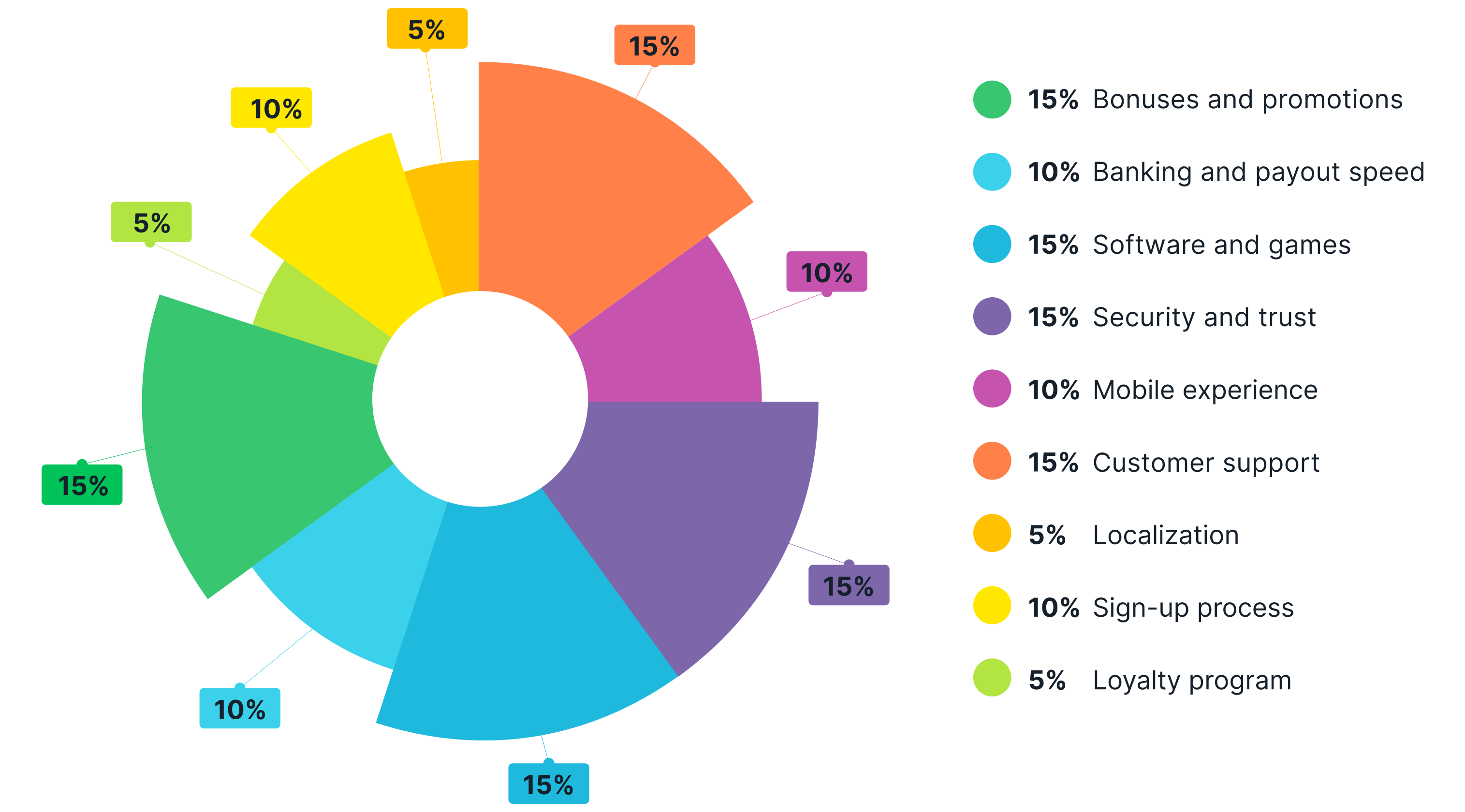
For participants in the UK, the Maestrogame live dealer game has become a preferred choice. A key reason for its reputation is a clear focus on security. In an online space where private information and money need protection, understanding what safeguards exist counts to every player. This review examines the distinct security and encryption methods Maestro uses. We’ll see how these systems operate to protect player details and guarantee fair play. The goal is to transcend technical jargon and show how these measures create a dependable experience for users throughout the UK.
The Bedrock of Trust: Advanced Encryption Technology
Maestro’s security is built on strong encryption, which establishes a digital shield for data in transit. The game uses standard Secure Socket Layer (SSL) encryption, frequently refreshed to the newer Transport Layer Security (TLS) protocols. This process jumbles every bit of information passing between a player’s device and the game servers. To anyone intercepting it, the data is just unreadable code. For someone playing in the UK, this safeguards everything: usernames, passwords, ID details, and all payment information. The data is only unscrambled by the intended receiver, who possesses the unique key. This keeps deposits, withdrawals, and personal details private, a basic necessity for any operator licensed in the UK.
The encryption strength is usually 256-bit, the same level used by banks worldwide. It works silently in the background. Players can check it’s active by spotting ‘https://’ and the padlock icon in their web browser’s address bar. Because online threats constantly change, the teams behind Maestro must regularly upgrade these systems. This ongoing maintenance is crucial. Having this layer of encryption in place builds fundamental trust. It lets players to focus on the game itself, not on worries about data theft or fraud.
Licensing, Regulation, and Game Integrity Assurance
Robust security goes beyond technology. It is also upheld by law and independent checks. For the UK audience, Maestro operates under a licence from the UK Gambling Commission (UKGC). This regulator is recognised for its strict rules. The licence mandates compliance with detailed practices for player safety, fair games, and stopping money laundering. The UKGC stipulates that all games, including live dealer ones like Maestro, use certified Random Number Generator (RNG) systems for any digital elements. It also insists that live streams come from approved, secure studios.
Fair play undergoes another check from independent auditors like eCOGRA or iTech Labs. These agencies scrutinise the game software and RNG to confirm outcomes are random and not fixed. For the player, this offers a direct assurance. Every card dealt or roulette ball spun in Maestro depends on chance, which safeguards the game’s honesty. The dual force of UKGC regulation and external certification creates a governance structure with multiple layers. It maintains the provider in check and gives UK players an environment that remains both legally safe and demonstrably fair.
Protection Strategies for User Safety
Cryptographic safeguards and permits are the basis, but Maestro also uses day-to-day operational security to safeguard players. These actions address the changing risks of being online and are essential to a complete security setup. A significant part is the account verification process, termed Know Your Customer (KYC). This is a UKGC legal rule. It requires providing documents to verify identity, age, and address, which prevents underage gambling and fake accounts.
- Secure Payment Processing: All money handling relies on systems conforming to the PCI DSS standard, the top level for payment security. Working with reliable payment methods familiar to UK users, like PayPal, Visa, and Mastercard, adds another layer of protection.
- Network and Server Security: The game servers reside in high-security data centres. These are secured by firewalls, systems that detect intruders, and technology to mitigate DDoS attacks, blocking unauthorised access and ensuring the service running.
- Responsible Gaming Tools: Players can establish limits on deposits, losses, and session times, or opt for self-exclusion directly from their account. These tools enable people control their own activity.
- Two-Factor Authentication (2FA): This feature is not mandatory but strongly suggested. It introduces a second check during login, like a code sent to a phone, rendering account theft much harder even if a password is stolen.
These operational steps work together to create a secure environment. They guarantee that while the game seems smooth and engaging on screen, the background systems are constantly supervised and managed. For a UK player, this means security adapts. It offers not just a shield for data, but active tools to control their own gaming habits and spending.
Real-world, Live Studio, and Infrastructure Security
Because Maestro is a live dealer game, its security also includes the real-world broadcast studio and the equipment there. The reliability of the live video feed is critical. Providers invest a lot to safeguard their studios against tampering or cheating. These are controlled-access facilities, usually protected 24/7 by security staff and monitored by extensive CCTV cameras. The dealers are trained professionals who follow strict routines for every part of the game, all watched by multiple camera angles.
The studio technology is also important. Physical items like card shoes, roulette wheels, and tables are inspected and certified often to verify they work correctly. The live video stream itself is safeguarded by digital rights management (DRM) and watermarking. This blocks piracy or someone intercepting the feed. For a viewer in the UK, this physical security offers concrete peace of mind. They watch the action happen live, with certainty that the setting is as secure and fair as a good brick-and-mortar casino, but with the convenience of playing from home.
- Controlled Access Studios: Limited entry, constant surveillance, and screened staff form a physical space where game presentation cannot be interfered with.
- Certified Equipment: Regular integrity tests and certification for all physical game items (cards, wheels) confirm results are not biased.
- Stream Integrity: Sophisticated DRM and unique session watermarks stop the stream from being hijacked or altered, guaranteeing the feed is genuine.
The UK Players Need to Consider and Practise
Maestro and the sites that host it manage most security work, but smart players also play a role in their own safety. Recognising the signs of a secure site is the key move. UK players should always check for a valid UKGC licence number, normally found at the very bottom of a casino website’s main page. They should confirm their connection is secure (https://) and be suspicious of any unexpected emails or messages asking for login or payment details.
- Confirm Licensing: Always check that the site offering Maestro has a current UK Gambling Commission licence before you deposit money.
- Use Secure Connections: Avoid playing on public Wi-Fi without a VPN. Use a private, password-protected internet connection for gaming.
- Control Personal Tools: Make active use of the responsible gaming tools available. Set deposit, loss, and time limits that match your budget and lifestyle.
- Keep Software Updated: Make sure your computer or phone’s operating system and web browser have the latest updates, so you get new security fixes.
Understanding that security is a shared effort makes the whole online gaming experience safer. By picking licensed operators that feature Maestro, following good digital habits, and using the built-in protection tools, UK players can greatly minimise their risks.
The Outlook for Security in Real-Time Dealer Gaming
Cybersecurity is always evolving, and the same goes for the measures in high-end live games like Maestro. Future developments may include more sophisticated biometric checks, like fingerprint or face recognition, for logging into accounts. Blockchain technology, with its open and immutable record-keeping, could present new ways to verify game fairness and payment history without a central authority.
Artificial intelligence and machine learning will likely see wider use in identifying threats early. These systems can pinpoint patterns of fraud or signs of problem gambling as they happen, enabling quicker action. In the UK market, where rules are already tight, these technologies will elevate the standards for player protection even higher. The challenge for top game providers will be to incorporate these advanced protocols without disruption, without detracting from the experience for the user. The aim remains unchanged: to build a gaming space where security is so robust and ever-present that players don’t even consider it, enabling them to focus on the game.